
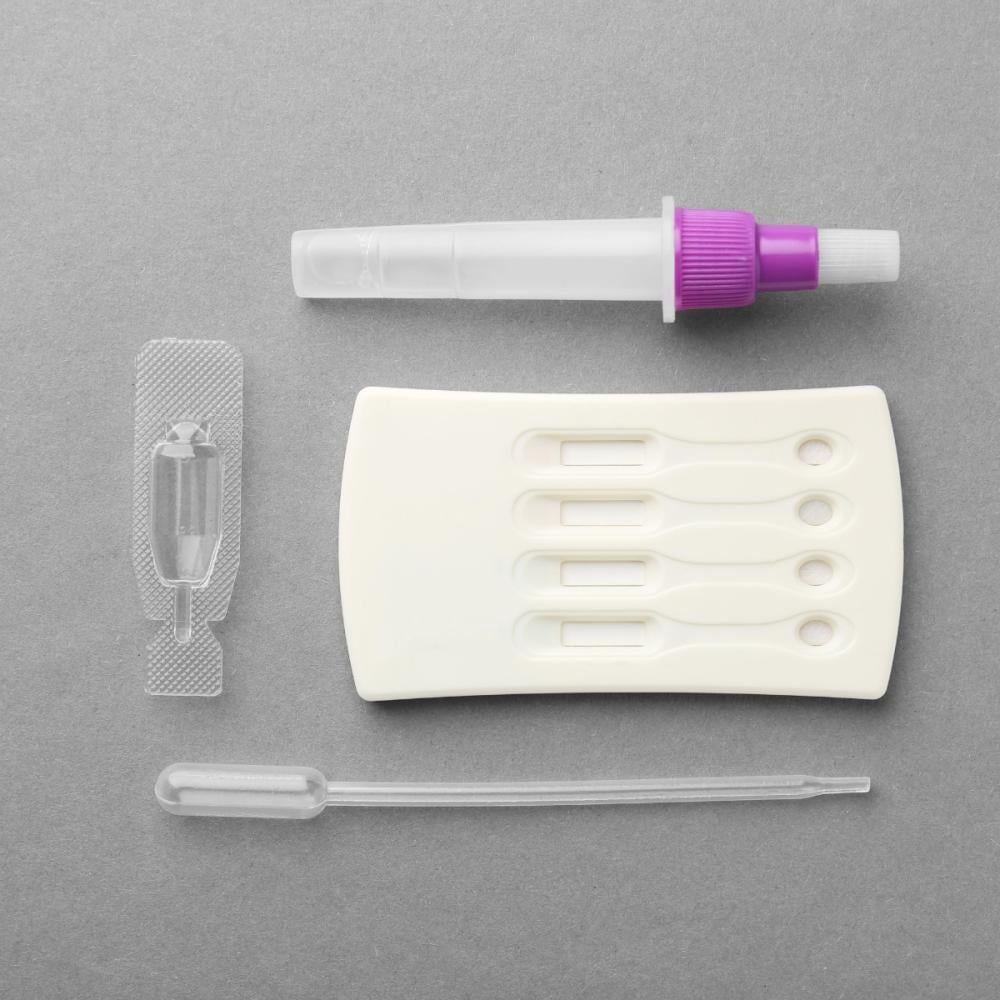
Quick answer: Home tests come in two types: tests that tell you whether concentration is above or below a set level, and smartphone-based devices that estimate concentration and motility. In studies, their accuracy in separating low from normal results ranged from about 82% to 98%, depending on the device and category. But they do not measure morphology or vitality, and they cannot detect a varicocele or a hormone problem. A normal result is partly reassuring; a low result means a lab analysis.
What types of home tests are there?
- Threshold tests: give a result in categories, such as below or above 15 million/mL, and some have US Food and Drug Administration clearance.
- Smartphone devices: a lens or chip attached to the phone, with an app that analyses a video of the sample to estimate concentration and motility.
How accurate are they compared with a lab?
| Type of test | Study | Accuracy |
|---|---|---|
| Home centrifugal concentration device | 239 untrained users | 93.3% for results up to 15 million/mL, 82.4% for 15-55, 95.5% above 55 |
| Smartphone device measuring motile concentration | 144 samples from 24 donors | 97.8% for detecting low motile concentration |
| Automated smartphone device | 350 samples at a fertility clinic | About 98% for classifying samples by WHO criteria |
| Smartphone app with lens | 39 samples | Sensitivity 92.6%, specificity 66.7%, overall accuracy 84.6% |
Results come from the centrifugal device study, the motile-concentration device study, the automated device study and the app study. A specificity of 66.7% means about a third of normal samples showed as abnormal on that device. In a newer study of 104 men, agreement with the lab was strong for concentration and weaker for motility.
What do home tests not measure?
- Sperm shape and the share of live sperm.
- White blood cells and antisperm antibodies.
- DNA fragmentation.
- A physical examination for varicocele and hormone tests.
When is a home test not enough?
If the result is low, or pregnancy has not happened after a year when the female partner is under 35, or after 6 months if she is 35 or older, according to the American Society for Reproductive Medicine. The same applies with pain, blood in semen or previous surgery. Then you need a full lab analysis and a medical assessment. Read my husband has weak sperm.
Where does Cargin Twin fit?
A home test does not replace an analysis, and a supplement does not replace a diagnosis. Cargin Twin is a German-made food supplement with glutathione, vitamin C, vitamin E, zinc, coenzyme Q10, L-carnitine, acetyl-L-carnitine and L-arginine, taken as two sachets a day, before and after a meal. It may support your intake of these nutrients as part of a healthy lifestyle. It is not a medicine.
Frequently asked questions
Does a home test replace a lab analysis?
No. It is a first screening tool that measures concentration and sometimes motility, while the lab measures more parameters more accurately.
Can a home test detect zero sperm?
It may show a very low result, but confirming azoospermia needs a lab analysis.
Does abstinence time affect a home test?
Yes, as in the lab; longer abstinence raises the count in the sample. Follow the device instructions.
When should I repeat the test after changing my lifestyle?
After about three months, the time a new batch takes to form. Read the fastest way to increase sperm count.
Read next
- The fastest way to increase sperm count
- My husband has weak sperm
- Sperm agglutination on a semen analysis
- Supplements to increase sperm count
Reviewed by the HealthBridge medical team, November 2026. This article is for health education and does not replace medical advice. Food supplements are not medicines and are not intended to diagnose or treat any disease.