
Quick answer: The strongest evidence is for a Mediterranean pattern: among 225 men at a Greek fertility clinic, the least adherent were about 2.6 times as likely to have abnormal concentration, count and motility. Vegetarians did not differ from meat-eaters in a meta-analysis of 16 studies. Keto raised testosterone in step with weight loss, with too little data on sperm. And weight loss itself raised sperm count in a trial in men with obesity.
Mediterranean diet: what did studies find?
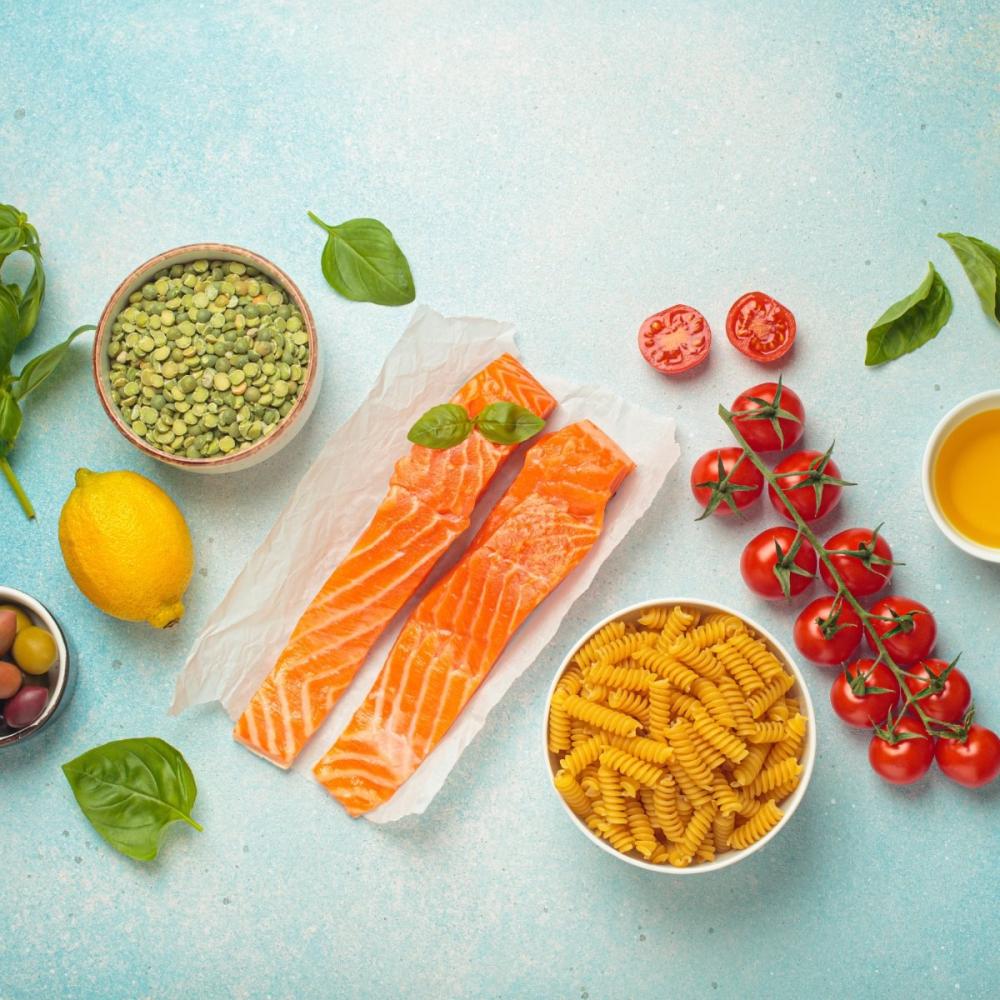
In a Greek study of 225 men from couples attending a fertility clinic, 47.4% of the least adherent to the Mediterranean diet were below the reference value for concentration, compared with 16.7% of the most adherent. After adjusting for other factors, the least adherent were about 2.6 times as likely to have abnormal concentration, count and motility. It is a cross-sectional study that shows a link, not a cause. The diet is built on vegetables, fruit, legumes, whole grains, fish and olive oil; read Olive oil for men and sperm
Keto and low-carb: what about testosterone?
A 2023 meta-analysis of 7 studies with 230 participants found total testosterone rose after ketogenic diets, more clearly with very-low-calorie keto, and the rise tracked weight loss. In contrast, a 2022 meta-analysis in healthy men found that low-carb diets high in protein (35% of energy or more) clearly lowered testosterone, while moderate-protein versions had no consistent effect. There are not enough trials on keto and sperm themselves.
Vegetarian diets: do they weaken sperm?
A 2024 meta-analysis of 16 observational studies found no significant difference between vegetarians and meat-eaters in total count, concentration, motility or morphology. A strict vegan does need a source of vitamin B12; read Vitamin B12 for men: deficiency, sperm and dose
Is weight loss the diet that matters most?
For men with obesity, it may be. In a Danish trial of 56 men with obesity, a supervised low-calorie diet (800 kcal a day) for 8 weeks led to about 16.5 kg of weight loss, with concentration up 1.49-fold and count up 1.41-fold. The gains lasted a year in men who kept the weight off, not in those who regained it, and motility did not change. Read Weight-loss injections and male fertility
How do the diets compare?
| Diet | Key evidence | Finding | Caution |
|---|---|---|---|
| Mediterranean | Greek study, 225 men | Least adherent about 2.6 times as likely to have abnormal results | Cross-sectional study |
| Keto | 2023 meta-analysis, 7 studies | Higher testosterone linked to weight loss | Too little data on sperm |
| Low-carb, high-protein | 2022 meta-analysis, 27 studies | Lower testosterone with 35% protein or more | In healthy men |
| Vegetarian | 2024 meta-analysis, 16 studies | No significant difference in semen results | Needs a vitamin B12 source |
| Low-calorie weight loss | 2022 trial, 56 men | Concentration 1.49-fold and count 1.41-fold higher | Medically supervised; the gain fades if weight returns |
So which diet should you choose?
- A Mediterranean-style pattern built from Gulf foods, as in Foods that boost sperm count: a Gulf-kitchen weekly menu.
- If you are overweight, losing weight with a plan you can keep matters more than the diet's name.
- Avoid very high protein if you choose a low-carb diet.
- Cut back on foods linked to weaker results; read Foods and drinks that harm sperm.
Where does Cargin Twin fit?
Cargin Twin does not replace a healthy diet, but it may complement one for men who want a steady source of glutathione, vitamin C, vitamin E, zinc, CoQ10, L-carnitine, acetyl-L-carnitine and L-arginine, taken as two sachets a day before and after a meal. It is not a medicine and not a substitute for food.
Frequently asked questions
Is keto bad for fertility?
There is not enough data on sperm. Testosterone rose with weight loss, and fell with high-protein low-carb diets in healthy men.
Do I need supplements if I am vegetarian?
You may need vitamin B12, especially on a strict vegan diet, so ask your doctor about testing it.
When does a diet show on the semen analysis?
In the Danish trial, improvement showed after 8 weeks of weight loss; a test after about three months gives a fairer picture.
Do I have to stick to one named diet?
The principles matter more than the name: food close to a Mediterranean pattern, a healthy weight and no extremes in either direction.
Read next
- Foods that boost sperm count: a Gulf-kitchen weekly menu
- Foods and drinks that harm sperm
- Weight-loss injections and male fertility
- Olive oil for men and sperm
Reviewed by the HealthBridge medical team, November 2026. This article is for health education and does not replace medical advice. Food supplements are not medicines and are not intended to diagnose or treat any disease.